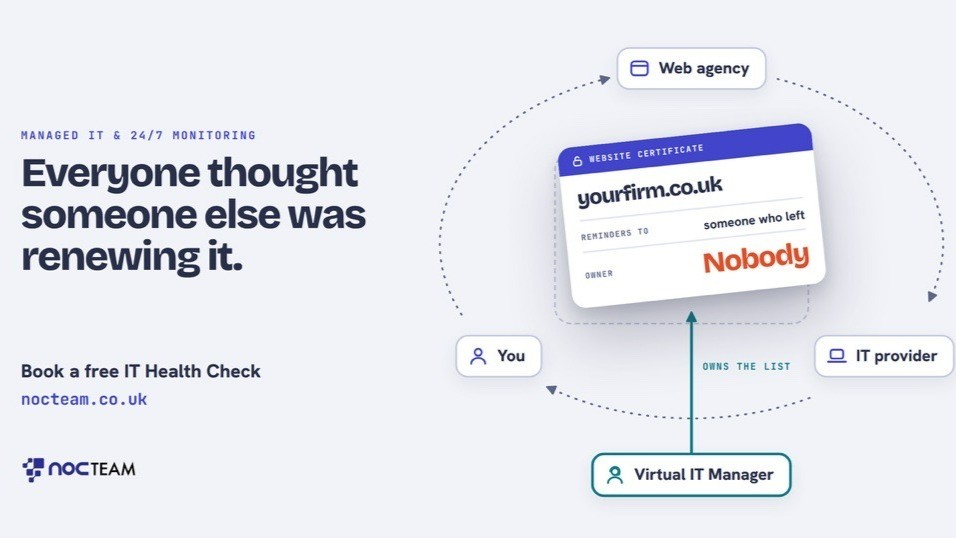
Oliver, the managing director of a boutique property development firm in Manchester, sits down at his desk on a bright Tuesday morning to email a high-profile investor a link to their new portfolio portal. He clicks send, feeling confident about the high-value deal on the table. Minutes later, his phone rings. The investor sounds confused, explaining that clicking the link triggered a prominent warning screen advising him not to proceed. Oliver tries to open the link himself, only to find that the website’s security certificate quietly expired at midnight. Instead of a professional showcase, his site now looks like a risk.
This scenario highlights a common operational blind spot. In plain English, a website certificate is essentially a passport that proves your site is genuinely yours and keeps data private. These credentials are never permanent; they are issued with strict expiry dates to keep security standards fresh. But the real story here isn't a technology failure—it is a lack of clear ownership. In many businesses, it is rarely obvious whose job it is to track these renewals. The responsibility often falls into a grey area between marketing, external web developers, and the leadership team. Because nobody truly owns the problem, nobody remembers to check until the deadline passes and browsers start blocking visitors with a warning.
The commercial impact of a sudden lapse extends beyond a temporary inconvenience or a bruised ego. For a property firm, an accountancy practice, or a legal consultancy, your online presence is often the very first impression you make on a prospective client. When an investor or a corporate partner clicks your link and hits a security block, they rarely assume it is a simple administrative oversight. Instead, it raises quiet doubts about your wider attention to detail and professional standards. That brief hesitation can cause them to step back from negotiations before you even have a chance to explain the situation. You are no longer judged on the quality of your professional expertise, but on a basic housekeeping failure.
Protecting your firm from this kind of quiet reputational damage requires moving away from manual calendar reminders and fragmented oversight. A robust IT setup relies on continuous monitoring that tracks every underlying component of your systems around the clock, alerting you well before any credential expires. While automated tools keep a watchful eye on your assets day and night, dedicated engineers systematically review and manage these renewals during agreed hours. This structured approach ensures that a looming expiry is caught, processed, and updated seamlessly behind the scenes, long before it ever has a chance to greet your valuable clients with a warning sign.
At NOCTeam, we help ambitious professional services firms establish exactly this level of disciplined management. By clearly assigning ownership and automating the oversight of your systems, we replace the uncertainty of manual upkeep with operational clarity. We simply act as the invisible guardians of your web presence, ensuring your firm always puts its best foot forward without adding to your daily workload.
If you cannot say with confidence who would be told before your website certificate expires, that is worth finding out before a client does. Most small firms do not need to hire an IT manager to fix this. They need someone whose job it is to own the list, which is exactly what a virtual IT manager at NOCTeam does, without the cost of a full-time hire. A free IT Health Check will show you what is being watched, what is not, and who should be. Book yours at nocteam.co.uk or email [email protected].
#VirtualITManager #ITSupport #ManagedIT #ProfessionalServices #BusinessContinuity #NOCTeam.
Originally published on LinkedIn.