In the digital era, data is the lifeblood of every business. Yet, despite the critical importance of keeping information safe, many organizations still rely on single-point solutions like one cloud sync service that offer a false sense of security. When disaster strikes (be it ransomware, hardware failure, or human error), a single copy is never enough.
This is why the 3-2-1 Backup Rule is not just a best practice; it is the undisputed foundation of true data resilience and business continuity.
What is the 3-2-1 Backup Rule?
The 3-2-1 rule is a simple, vendor-neutral framework designed to protect against all common causes of data loss, ensuring that multiple recovery points are always available, regardless of the incident.
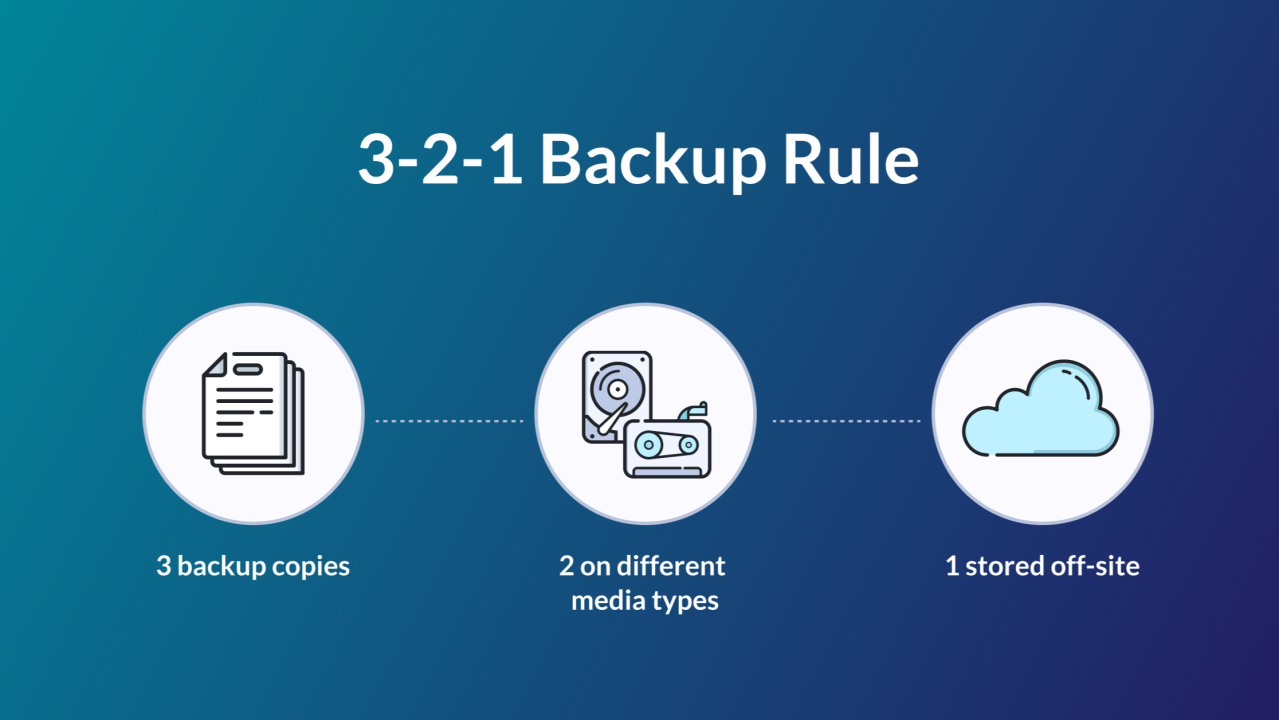
The rule states that you should always maintain,
- 3 Copies of Your Data - This includes the original production data and at least two separate backup copies.
- 2 Different Media Types - Store your copies on at least two distinct types of storage media (e.g., local disk/NAS, magnetic tape, cloud storage, or an external hard drive).
- 1 Offsite Copy - At least one copy must be stored offsite (e.g., in the cloud or a secure remote facility) to protect against site-specific disasters like fire, flood, or theft.
Why the 3-2-1 Rule is Critical for Modern Business
The complexity of modern threats means that simply copying files is insufficient. The 3-2-1 rule addresses the four most common failure scenarios that single-copy solutions cannot handle:
1. Protection Against Ransomware and Cyber Attacks
Ransomware attacks are designed to encrypt (and now often exfiltrate) all reachable data copies. If a backup is directly connected to the network, it can be encrypted just as easily as the production data.
- 3-2-1 Solution - The offsite copy (3), especially if it is stored in immutable cloud storage or a disconnected medium (like tape), ensures that the cyberattack cannot reach all copies simultaneously. This guarantees a clean, uninfected recovery point.
2. Mitigating Hardware and Local Disaster
Local storage devices (servers, NAS) have a finite lifespan and can fail without warning. Site-specific events (power surges, fire, theft) can destroy all data stored locally.
- 3-2-1 Solution - The requirement for two different media types (2) and an offsite copy (3) means that if your primary server fails and your local backup fails with it, or if your office is inaccessible, you can still restore from the cloud or tape.
3. Combating Human Error and Insider Threats
The vast majority of data loss incidents are due to accidental deletion, misconfiguration, or malicious actions by an employee.
- 3-2-1 Solution - Multiple backups on different platforms increase the chance of retaining a copy that pre-dates the error or malicious deletion, providing necessary redundancy for targeted recovery.
4. Ensuring Regulatory Compliance
Many industry regulations (like UK GDPR or various financial standards) explicitly or implicitly require robust data availability and protection that goes beyond single-copy recovery.
- 3-2-1 Solution - This framework provides verifiable proof of due diligence and robust disaster recovery planning, helping meet strict compliance mandates for data protection.
Implementing the 3-2-1 Rule - A Practical Example
For a modern business utilizing cloud platforms (like Microsoft 365) and on-premise servers, the 3-2-1 rule might look like this:
- 3 Copies - Production Data (Live Server) + Local Backup Copy + Cloud Backup Copy.
- 2 Media Types - Production Data on SSD/SAN and the other two copies on NAS/Disk and Cloud Storage (Object Storage).
- 1 Offsite Copy - The Cloud Backup Copy is stored in a geographically separate data center.
Secure Your Data Resilience with NOCTeam
Implementing a true 3-2-1 strategy requires the right architecture, automation, and ongoing validation. NOCTeam specializes in designing and managing comprehensive data protection solutions that eliminate single points of failure.
- Managed Backup Solutions - We design automated backup schedules tailored to your Recovery Point Objectives (RPO) and Recovery Time Objectives (RTO).
- Secure Offsite Storage - We provide and manage secure, compliant, and immutable cloud repositories to ensure your critical offsite copy is safe from ransomware and local disaster.
- Disaster Recovery (DR) Planning - We don't just backup your data; we validate that your recovery plan works, regularly testing restoration from your offsite copy to ensure minimal downtime when a real incident occurs.
Don't compromise your business continuity by relying on single, outdated backup methods. Contact NOCTeam today on [email protected] to get started on building a truly resilient data protection strategy, with a free IT-assessment on your systems.
#DataBackup #CyberSecurity #321Rule #DataResilience #NOCTeam
Originally published on LinkedIn.