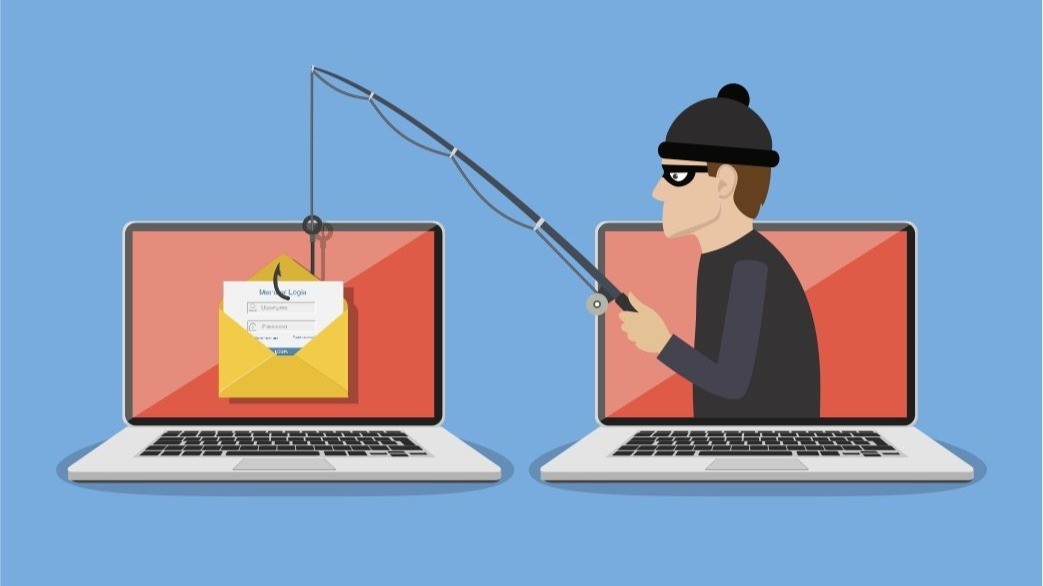
For years, phishing was easy to spot: a badly worded email from a "Nigerian prince" or a fake bank alert riddled with typos.
Today, those simple days are over. Phishing has evolved into highly technical, multi-vector attacks designed not just to steal passwords, but to bypass Multi-Factor Authentication (MFA), compromise entire software supply chains, and infiltrate high-trust environments.
For Business Leaders and IT Management, understanding these new tactics is critical. The war is no longer against spam—it’s against sophisticated deception.
Here are three cutting-edge phishing strategies currently being deployed by cybercriminals:
1. Bypassing 2FA via UX Deception (Browser-in-the-Browser)
Even strong Multi-Factor Authentication (MFA) is no longer a guaranteed shield. Attackers have developed advanced techniques that steal the authenticated session rather than the password alone.
The most notorious current technique is the Browser-in-the-Browser (BITB) attack. Instead of directing a user to a standard malicious page, the attacker uses JavaScript to generate a fake pop-up window within the legitimate browser page. This pop-up perfectly mimics a real authentication window (like Google or Microsoft login) and even retains the visual security cues.
Crucially, some new phishing kits are highly effective at capturing credentials and the one-time 2FA code, allowing the attacker to hijack the live user session immediately after the user authenticates.
Example in Action:
- We are seeing "sneaky 2FA phishing kits" that use BITB pop-ups, fooling users into believing they are interacting with a secure, native application window when, in fact, their credentials are being intercepted and used instantly for session hijacking. (Read more: Sneaky 2FA Phishing Kit Adds BITB Pop-ups for Session Hijacking)
2. Hyper-Scaled Mobile and SMS Attacks (Smishing)
While email remains a threat, criminals are capitalizing on the high trust we place in our mobile devices. Smishing (SMS phishing) uses text messages to create immediate urgency, targeting mobile banking data and digital wallets.
These operations are often run by professional, organized crime groups acting at massive, industrial scale, allowing them to rapidly cycle through thousands of phone numbers and targets globally. The short, high-trust nature of a text message combined with immediate access to banking apps makes this a highly lucrative vector.
Example in Action:
- The scale of this threat is massive. Google recently filed a lawsuit to disrupt a powerful Chinese SMS phishing triad that was responsible for flooding users with millions of text messages designed to steal financial and personal data. (Read more: Google Sues to Disrupt Chinese SMS Phishing Triad)
3. Supply Chain and High-Trust Software Infiltration
The newest and most insidious forms of phishing don't target end-users—they target the developers and the software ecosystem that builds your applications. By injecting malicious code into legitimate libraries or packages, attackers compromise the integrity of the supply chain.
This approach transforms trusted resources into Trojan horses, ensuring that malware is distributed to any company that downloads the compromised code, often bypassing traditional perimeter defenses entirely.
Examples in Action:
- Open Source Sabotage: Malicious code was found hiding in several npm packages using cloaking techniques to avoid detection, compromising applications across the software world. (Read more: Seven npm packages use AdSpect Cloaking technique to hide malicious code)
- High-Trust Disguise: Cybercriminals distributed the TamperedChef malware by disguising it as a fake Linux distribution—a highly trusted piece of software targeted specifically at developers and technical users. (Read more: TamperedChef Malware Spreads Via Fake Linux Distro)
Preparation is the Only Defense
The evolution of phishing demands an equally evolved defense strategy. It's no longer about simply telling employees to check the sender's email address.
To counter these cunning strategies, your organization needs layered defense managed by experts.
Here is how NOCTeam helps organizations prepare against next-gen phishing tactics:
- Robust Data Governance - We can help you ensure access controls adhere to the Principle of Least Privilege, preventing applications (even trusted ones like Copilot) from accessing data they don't need, which stops agents from accidentally exposing sensitive data.
- Layered Technical Readiness - We can guide the implementation of security keys and hardware tokens (FIDO2) for MFA, which are cryptographically protected and much harder for attackers to phish than time-based codes.
- Targeted Awareness Training - We can conduct bespoke Targeted Awareness Training for your end-users on recognizing all types of phishing attempts, including advanced techniques like Smishing and BITB attacks.
- Continuous Monitoring - We deploy solutions for Continuous Monitoring of your networks traffic and user behavior for subtle signs of session hijacking, suspicious activity, or unusual software package downloads.
Don't wait for your security perimeter to be breached by a tactic that didn't exist a year ago. Prepare your systems and your people for the new era of sophisticated cyber deception.
We offer expert guidance to assess and strengthen your defenses. Reach out to us today at [email protected] for a FREE IT Security Checkup to get started!
#CyberSecurity #Phishing #Smishing #SupplyChainSecurity #ITSecurity
Originally published on LinkedIn.