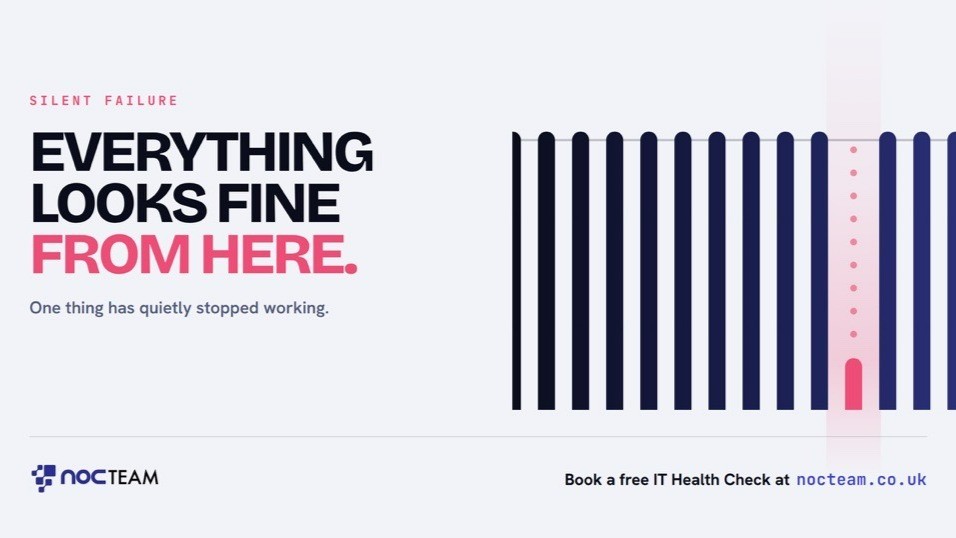
Eleanor, the operations director of a busy legal practice in central London, arrives at the office on a bright Monday morning feeling prepared for a critical week. She settles at her desk, opens her laptop, and expects to see a flurry of replies concerning a sensitive corporate acquisition. Instead, her inbox is entirely static. She assumes her clients simply decided to enjoy a peaceful weekend and turns her attention to drafting documents. By midday, a senior partner from the opposing counsel calls the main office line, demanding to know why the crucial contracts were never sent. The acquisition timeline is thrown into immediate jeopardy, and Eleanor is left looking completely unprofessional. Her mailbox had quietly stopped synchronising on Saturday afternoon, providing absolutely no warning, no error message, and no indication that anything was amiss.
This scenario illustrates the most common and damaging type of technology crisis for small professional firms: the silent failure. Business owners frequently operate under the assumption that when computer infrastructure breaks, it will announce its failure loudly. They expect a dramatic system crash or a persistent error box demanding attention. The reality of modern technology is far more subtle and significantly more perilous. Systems frequently stop communicating with one another in the background without making a single sound. A cloud storage folder loses its synchronisation path, an essential security protocol quietly expires overnight, or an automatic software update introduces a hidden conflict. To the user, everything appears perfectly normal. You can draft a message, attach a sensitive document, press send, and watch the communication disappear from your outbox. You trust that the system has done its job, while your client sits waiting, eventually concluding that you have ignored their urgent requests.
For a business that trades entirely on expertise, trust, and reliability, an invisible breakdown represents an unacceptable commercial risk. When a boutique accountancy practice misses a regulatory submission because a secure portal connection silently failed, the financial penalties fall directly on the client. When a human resources consultancy fails to distribute vital employee transition documents on time, the resulting friction can destroy a long-standing partnership. The actual cost of an infrastructure failure is rarely about the expense of replacing a physical device or paying for a morning of technical troubleshooting. The true expense is measured in the erosion of a hard-won professional reputation. It is measured in the unbillable hours your senior team spends apologising to frustrated stakeholders. Most importantly, it is measured in the persistent anxiety that haunts operations managers who wonder what else might be broken without anyone noticing. Your leadership team should be focused on driving revenue, rather than constantly performing manual checks to ensure their basic communication tools are functioning.
The traditional approach to this widespread problem is inherently flawed because it relies entirely on reaction. A firm waits until a process completely collapses or a client complains loudly, and then an expensive professional wastes a morning on hold with an outsourced helpdesk. The correct approach requires continuous, invisible oversight of your entire digital environment. Your infrastructure should be observed constantly, allowing tiny anomalies to be detected and addressed before they cascade into a crisis. If a connection fails over the weekend, that event should instantly generate an alert, creating a detailed log so technicians can investigate and resolve the fault before your team arrives for work. It is vital to recognise that continuous monitoring is distinct from continuous response. The true value lies in relentless awareness, ensuring faults are caught, queued, and corrected within your standard operating hours. By partnering with NOCTeam, your firm benefits from this rigorous, proactive vigilance. We maintain the underlying architecture, manage the security protocols, and fix the invisible faults quietly in the background.
If you are beginning to suspect that your current technology strategy relies more on good luck than proper planning, it is time to gain some much-needed clarity. You can arrange a comprehensive, complimentary review of your systems by booking an IT Health Check at nocteam.co.uk or by contacting our team directly at [email protected] to discuss your setup.
#BusinessContinuity #ProfessionalServices #ManagedIT #VirtualitManager #ITSupport
Originally published on LinkedIn.